
Southern Valleys | RED STAG ROAR
Pull up a chair. The fire’s warm, and you’re in good company.
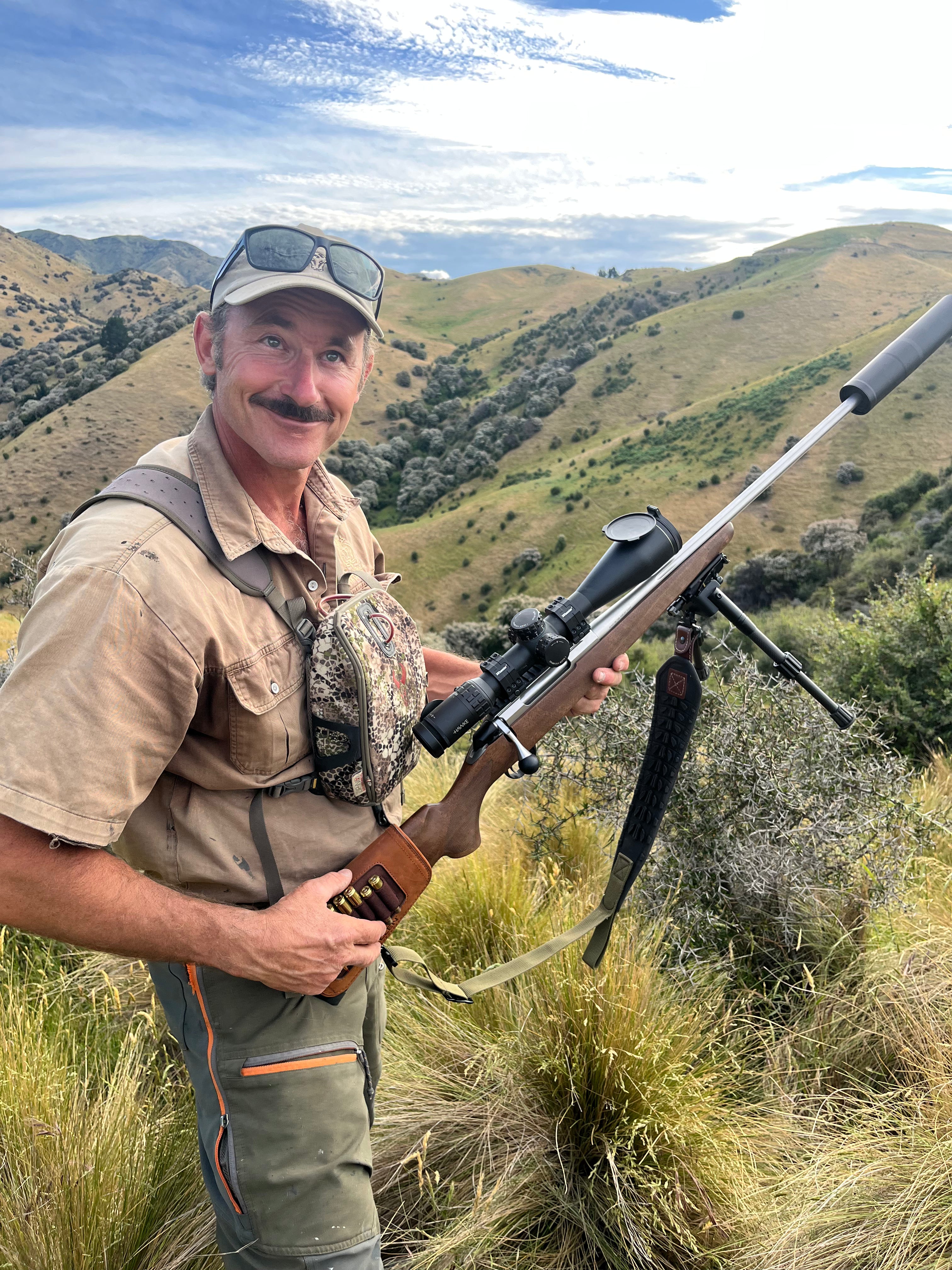
The roar is a fickle mistress. Every deer hunter chases her, though not necessarily for the promise of a trophy. The antlers matter, of course. No honest hunter would claim otherwise. But they are only part of it. What we truly pursue is the experience: the cold air, the heightened senses, the distant challenge rolling through the hills and the brief opportunity to enter a world governed by older laws.
Autumn marks the season, but it does not set the precise date.
The roar follows no timetable that can be relied upon. It can arrive early or late, build slowly or erupt overnight. The first deep chill begins to stir the stags, but it usually takes a prolonged spell of cold weather to bring the roar properly to life. Then, just as the valleys begin to reverberate with it, a warm nor’wester can sweep across the country and bring everything to a halt. Sometimes the roar resumes when the cold returns. Sometimes the whole thing becomes scrambled and uncertain, with stags roaring half-heartedly or falling silent altogether.
Timing is everything.
Being in the right place at the right moment requires more than years of hunting, good equipment and knowledge of the land. You need all those things, certainly, but you also need something no hunter can manufacture.
You need a little luck.
The Adventure map:

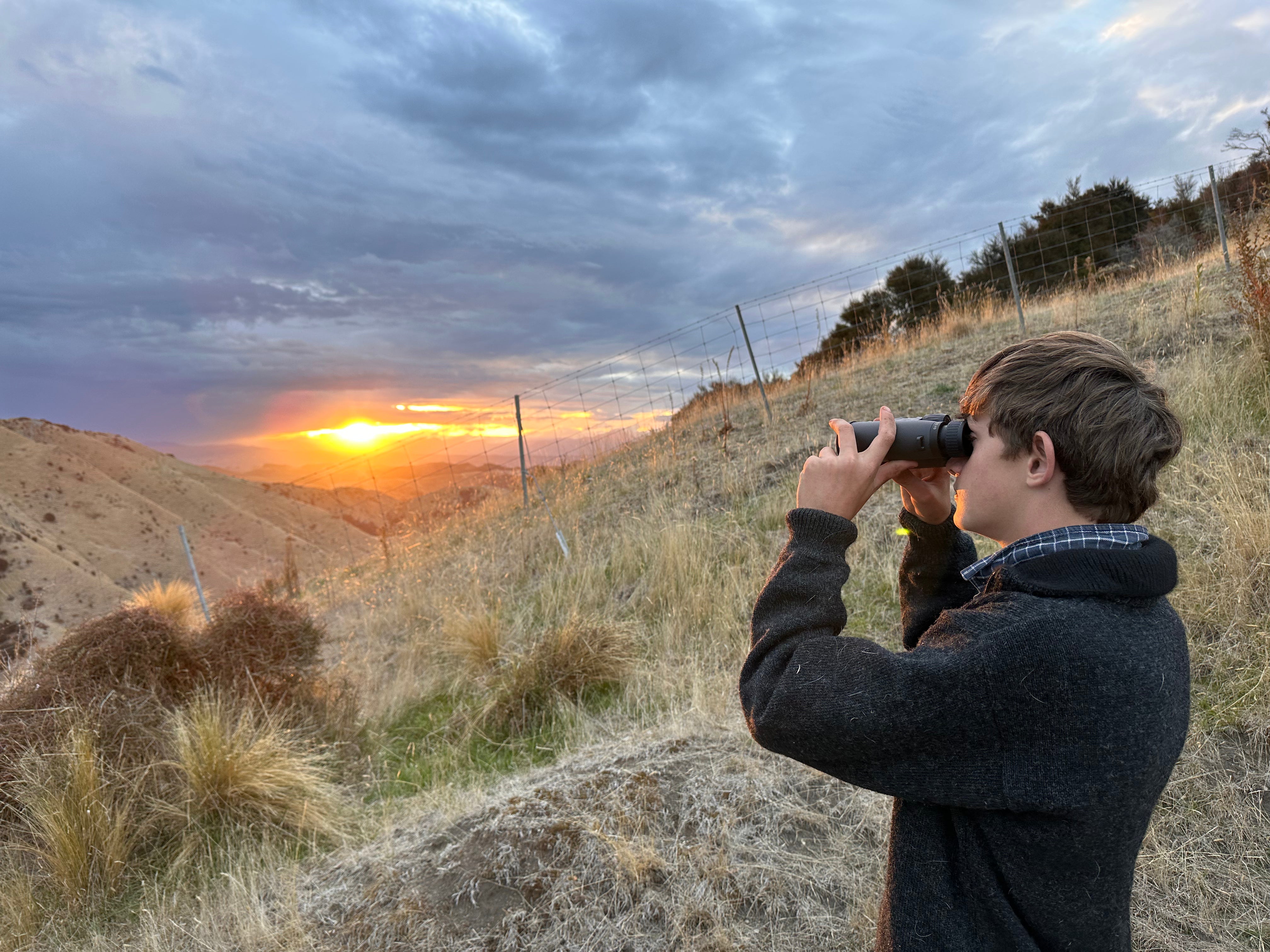
On this particular hunt, luck and I had brought my eldest son with me. Skye, the trusty yet excitable yellow Lab always accompanies me. It was a perfect trio.
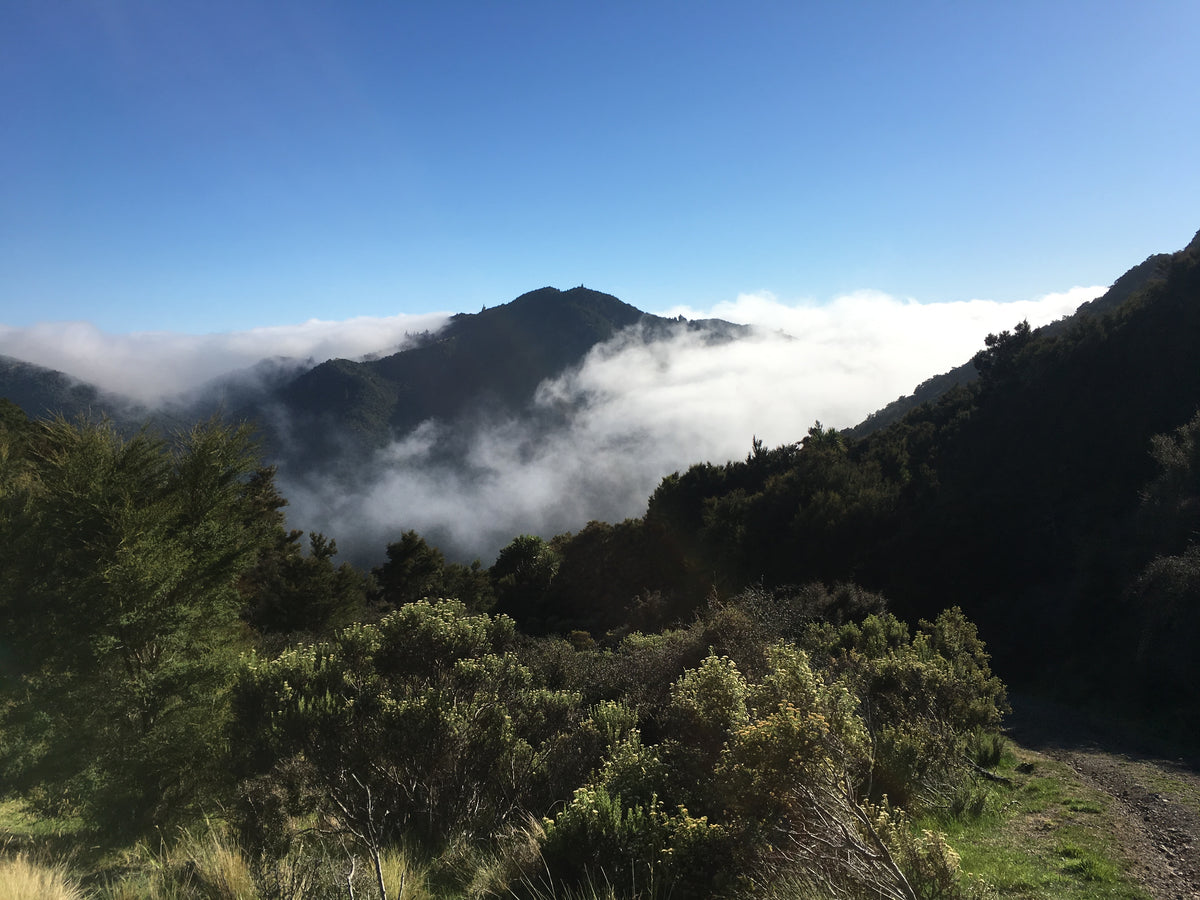
He was thirteen at the time, old enough to understand the importance of the occasion but still young enough to laugh at his father without restraint. We were deep in the roar, hunting country made up of open, rolling hills that rose into steeper faces clothed in kānuka. Cliffs interrupted the slopes, and narrow gullies cut through the ground wherever water had found a weakness.
It was good country for deer. There was plenty of cover in which they could disappear and enough open ground for them to watch anything approaching from a considerable distance.
It was less generous to hunters.
The steep faces made every movement harder and every shot more complicated. A deer standing across a gully might appear close enough, yet the distance could be deceptive. Shooting steeply uphill or downhill introduces another layer of difficulty, and the awkward position makes a bad shot more likely. Lose your footing, rush the trigger or misjudge the angle and even a familiar rifle can suddenly feel like a strange object in your hands.
We moved carefully, stopping often to watch the scrub and listen.
During the roar, the entire landscape seems to change. The country may look the same, but it no longer feels empty. Every patch of kānuka might conceal a stag. Every gully seems capable of answering. You begin to hear imagined footsteps in the wind and see antler tips in branches. Somewhere beyond your vision, stags patrol their territory, guard their hinds and listen for rivals.
Eventually we found a good position and decided to roar.
There are hunters capable of producing a deep, convincing stag roar using nothing more than their own voice and years of practice. They can make the sound roll naturally from the chest, turning a human breath into something ancient and threatening.
I have my good days and my bad days.
I filled my lungs and delivered what I believed to be a forceful, dominant challenge.
My son looked at me and started laughing.
“What?” I asked.
He tried to compose himself.
“It’s your angry grizzly roar.”
I was somewhat offended. There are no grizzly bears in New Zealand, but apparently one had somehow found its way into the hills and was now calling through me.
I tried again.
This time I mustered everything I had. I drew the air down deeply, braced myself and attempted to produce the guttural challenge of a mature red stag defending his hinds.
What emerged sounded more like the final cry of a wounded emu.
I managed only half the performance before collapsing into laughter myself. My son was bent over, trying not to make a sound, which only made matters worse. Even Skye smirked at my abject failure.
It was not supposed to be like this.
I was the father. I was meant to be passing down vital traditional knowledge: how to read the land, understand the wind and imitate the roar of a great stag. Instead, we appeared to be playing an intercontinental game of guess-the-animal.
There was, however, something rather good about it. Hunting with your son is about more than the animal at the end. It is the conversations, the failures and the ridiculous moments that no one else will ever fully understand. Years later, it is often the laughter that returns most clearly.
Eventually we regained our composure. The hills fell silent again, and we remembered why we were there.
I reached for the electronic game caller - no - it's not really cheating but I do need to practice my roaring.
The presence of imaginary animals from several other continents had apparently failed to alarm the local inhabitants. Such is the power of the roar. At any other time of year, a mature stag survives by being cautious. He trusts his nose, keeps cover close and treats anything unusual as a reason to leave.
During the roar, those instincts become clouded by rivalry and the urgent need to gather and defend hinds. The sensible old survivor becomes an angry, lovesick fool.
I selected a proper stag call and sent it out across the hills.
Within seconds, a distant roar answered.
My son and I looked at each other. The laughter vanished. The atmosphere changed immediately.
We waited. Calling too quickly can sound unnatural, and there is always a temptation to overdo it when excitement takes hold. After a pause, we issued another challenge.
The stag answered without delay.
This time the roar was closer.
We called back and forth for perhaps five minutes, each challenge drawing him towards us. We could not see him at first, but we could track his progress by the growing strength of his voice. There is something extraordinary about hearing a stag approach unseen. The sound moves through the gullies before the animal appears, announcing both its power and its intention.
Then he stepped into view.
I raised the rangefinder.
Three hundred and fifty metres.

It was close enough for me, but this was not meant to be my stag. I wanted my son to take his first decent roar stag, and I wanted him to have a shot he could make with confidence.
“Wait,” I whispered. “Let him come closer.”
Through the binoculars we could see he was a worthy animal—a wide ten-pointer, elegant rather than massive. His antlers were not perfectly symmetrical, but they had character, and he was certainly a stag any young hunter would have been proud to take.
By now Skye could tell something was up - she could sense the tension, perhaps she could smell the stag. At the first murmur of excitement I gently cupped her muzzle - she knew it was not the time for antics. She quietened but her hind quarters shook in anticipation.
We called again.
He lifted his head and looked directly towards us. Then, convinced that an intruding rival had entered his country, he started up the hill.
At first he came steadily. Then he accelerated.
The gap closed far more quickly than we expected. One moment he was standing in the open at a comfortable distance; the next he was racing towards us, driven by anger and instinct.
Before we could reorganise ourselves, he was within a hundred metres. He reached the edge of the thick scrub and vanished.
We waited for him to emerge again.
Nothing moved.
The wind swirled across the face. Perhaps he caught the faintest trace of us. Perhaps some remaining fragment of his normal caution broke through the fog of the roar. Whatever happened, he disappeared as completely as though the hillside had swallowed him.
We searched the openings and watched the scrub, but there was no further roar and no glimpse of antler.
My son was disappointed. He had been seconds away from the opportunity we had come for.
“There’ll be another,” I assured him.
At thirteen, such words are not always easy to believe. At fifty, you understand that they are not always true. But a hunter cannot spend too long mourning an opportunity that never quite formed. The hills were still alive, daylight remained and the roar was not over.
So we called again.
Only moments later, another stag answered.
This one was farther away, but unlike the first, he was immediately visible on an open face across the next gully. The intervening country fell sharply away from us before rising just as steeply on the far side.

I ranged him.
Nine hundred metres.
Much too far for the 6.5 Creedmoor and certainly too far for the shot we wanted. But the stag was interested. He had heard a rival, and he was prepared to come looking for it.
We called again, mixing a hind bark with an angry challenge. The combination excited him immediately. He began charging down the hill, covering the steep ground with the ease possessed only by animals built for it.
For a few glorious moments, everything was working.
Then he encountered a mob of sheep.
The sheep startled, the stag hesitated, and the entire situation dissolved into confusion. Instead of continuing directly towards us, he turned and ran across the face on a tangent. It was the wrong direction, but it still brought him considerably closer.
I raised the rangefinder again.
A little over six hundred metres.
It was an extremely long shot for the Creedmoor and not one to take casually. Conditions, position, knowledge of the rifle and the ability to refuse the shot all mattered. I offered the rifle to my son, but he looked across the gully and considered it honestly.
He knew the distance was beyond what he could confidently manage.
“You take it,” he said.
There was no bravado and no attempt to prove himself. That decision made me prouder than a reckless pull of the trigger ever could. Hunting demands honesty. You must know your limits, because the animal pays for any lie you tell yourself.
I settled into position, confirmed the range and adjusted the elevation turret. The stag had stopped and was looking in our direction, still trying to understand the calls and the commotion among the sheep.
For a moment, he faced us.
I waited.
Then he turned broadside.
The crosshairs steadied. The movement of the hills and the weight of the distance seemed to narrow into one small point. I controlled my breathing, held the rifle firmly and pressed the trigger.
The shot broke across the valley.
I lost the stag momentarily under recoil, but my son saw the impact.
The stag rose, buckled backwards and then stumbled forwards again. I found him through the scope and caught sight of him taking four or five unsteady paces.
Then he dropped.
He let out a loud whoop and let go of Skye, who took off with abandon. Her sixth sense leading her along the line of the shot. There was no point calling her back. We would meet up in our own time near the carcass.
For several seconds we remained where we were, watching the place where he had fallen. Relief came first, followed by the rush of everything else. The long call-in, the lost ten-pointer, the difficult distance and the sudden final opportunity all seemed to arrive at once.
Darkness was already closing over the hills.
The stag lay across the gully, but the ground between us was far too steep and treacherous to tackle directly in the side-by-side. We had to backtrack, return to the established tracks and work our way around. On the map it was not far. On the ground it became a fifteen-minute detour while the last useful light drained from the sky.
I had carefully referenced where the stag had fallen, choosing landmarks on the skyline and features on the face. Even so, hills change in darkness. Distances shrink, contours disappear and every patch of scrub begins to resemble the last.
By the time we reached the far slope, night had arrived.
The headlights threw pale beams across the hillside, catching trunks, rocks and the silver undersides of leaves. Shadows moved as the side-by-side rocked on the uneven track. For a few uneasy minutes, I wondered whether we would walk past the stag without seeing it.
But we found him soon enough thanks to Skye. Her blonde form glowed in the torch light. A beacon for those without her sense of smell. Despite her uncanny ability to do exactly the opposite of what you are expecting she has a good nose and a never-ending desire to eat - and venison is her favourite. So of course she would find the stag.
Up close, he was far larger than he had appeared across the valley.

He was a magnificent, even twelve-pointer—the biggest deer either of us had ever seen. From nose to tail he seemed to measure twelve feet, though exhaustion and darkness may have added a little to his stature. What could not be exaggerated was his weight. He was enormous.
I could barely shift him alone.
Together, my thirteen-year-old son and I began dragging him downhill. Gravity helped, but not enough. We moved him in short stages, stopping repeatedly to regain our breath. We were careful not to let him roll. A tumble over that ground could damage the antlers, bruise the meat and turn a difficult recovery into a disaster.
He would move a foot and then catch on a rock. We would reposition ourselves, lift, pull and slide him another yard.
By the time we reached the side-by-side, both of us were thoroughly spent.
I reversed as far up the slope as I dared, but even together we could not lift the stag into the tray. We tried once, gained perhaps half the required height and lowered him again before one of us lost a hand—or a finger.
There was no winch and no helpful crowd waiting in the darkness. We had the machine, the hillside and whatever we could find around us.
I located two sturdy tree trunks and dragged them into place, arranging them as a crude loading ramp. It was not elegant engineering, but at that hour elegance was unnecessary. We only needed something that would work.
We heaved again. Then again and again. Skye tried to help by lightening the load a little. At every pause she darted in an licked more blood from the wound.
The stag moved slowly up the trunks, threatening several times to slide back and flatten us both. We changed our grips, pushed with our legs and somehow found a final reserve of strength.
At last, he slid into the tray.
He barely fitted. Skye was happily perched on the massive frame, licking and dreaming of her spoils.
The rear suspension sagged under the load until it was almost bottomed out. We stood there for a moment, breathing heavily and looking at what we had accomplished. Then we climbed into the front and slumped into our seats.
We still had a long way home.
The machine laboured beneath the weight as we followed the track through the darkness. We should have been too tired to speak, but neither of us stopped talking. We replayed the angry grizzly, the wounded emu, the ten-pointer that vanished into the scrub, the sheep that disrupted the second stag and the shot across the gully.
My son had not taken the stag we had intended for him. That opportunity would come another day. Yet he had shown restraint, good judgement and determination during a recovery that demanded everything we had left.
And we had done it together.
The antlers remain a reminder of that evening, but they are not the whole story. The true trophy is the memory of a father and son travelling home through the dark, exhausted, laughing and talking over the engine while the biggest stag they had ever seen filled the tray behind them.
That is why hunters chase the roar.
Not simply for the stag, and never merely for the antlers. We chase the uncertain promise carried on the autumn air. We chase the call from the next gully, the sudden appearance of an animal where moments before there was only empty country, and the stories that follow us home.
The roar is a fickle mistress.
But every so often, if the cold arrives, the wind behaves and luck decides to walk beside you, she gives you an evening you will remember for the rest of your life.

Wherever your next adventure takes you, remember there’s always a place for you around our campfire. Until next time.

Leave a comment
This site is protected by hCaptcha and the hCaptcha Privacy Policy and Terms of Service apply.