
Lake Rotoiti | The Still Water
Pull up a chair. The fire's warm, and you're in good company.
The reassuring burble of the V8 is always comforting, its effortless power a reminder that the old Land Rover Discovery is built for journeys exactly like this. To me, it is the vehicle of a rugged gentleman.
I leave the farm before first light, rolling quietly down the drive while the dew still clings to the grass and the world has yet to properly wake.
Five minutes later I pull into Robin's driveway. He's already outside, coffee in one hand, fly rod in the other.
"Get all your chores finished before you left?"
He grins.
"Did you get your permission slip signed?"
"Eventually."
He throws his gear into the back and climbs in.
"Ready?"
"I've been ready all week."
The canoe sits patiently on the roof while we head west.
Blenheim—"Boom Town," as the locals like to call it—soon falls behind us, and with every kilometre the noise of everyday life fades. It is far enough to leave one world behind and step into another.
The Wairau Valley opens before us.
To the north, the Richmond Ranges rise dark and brooding, their angular faces stacked and sharp, cascading skyward like something ancient and watchful. They beckon adventure in the way danger always does—stern and silent, like Mordor before the fires are lit. To the south, the rolling hills of Marlborough lie dry and pale, sunburnt and restless, tussock bending in the wind as sheep graze without urgency.
The road follows the river.
The valley tightens. The mountains press closer. The braided Wairau narrows and quickens, its wide silver threads gathering into darker channels. Vineyards give way to dairy pasture. Dairy pasture surrenders to forestry. Then even the signs of man disappear. Only forest, slope and sky remain—untamed and untameable.
Robin looks across to the dry hills south of the valley.
"We still need to ride the Leatham."
I nod.
"We do."
"It's been on the list too long."
The Leatham Road disappears into the backcountry towards Molesworth, weaving through a seemingly endless procession of river crossings. The track itself isn't especially difficult, but the water keeps you honest. Crossing after crossing, the tyres disappear beneath clear, fast-flowing current before climbing back onto gravel, only to do it all again a few hundred metres later.
"We'll camp at the hut."
"That's the plan."
"River will decide."
"It usually does."
Like most good adventures, it doesn't need much planning. Just a free weekend, two motorcycles and the willingness to see what lies around the next bend.
Robin nods towards the river.
"Bit of colour in it."
"Rain up west."
"Good for the lake."
"It'll keep the trout happy."
Silence returns. Neither of us minds. Some friendships are measured just as much by the conversations you don't need to have.
St Arnaud appears suddenly over the bonnet.
The lodge.
The pub.
The petrol station.
The general store.
The lake.
"There she is."
"There she is."
There is little here, and that is its beauty. A well-kept secret within a well-kept secret. The village exists only because it needs to, and no more.
The canoe strains against the roof racks like a hound scenting water.
"It knows."
"It does."
Early summer has eaten most of the snow. Rainbow Ski Area lies bare on the slopes above, its lifts standing idle against the rock. The lake is warmer than I expect. Insects stitch the still air. The water itself seems alive.
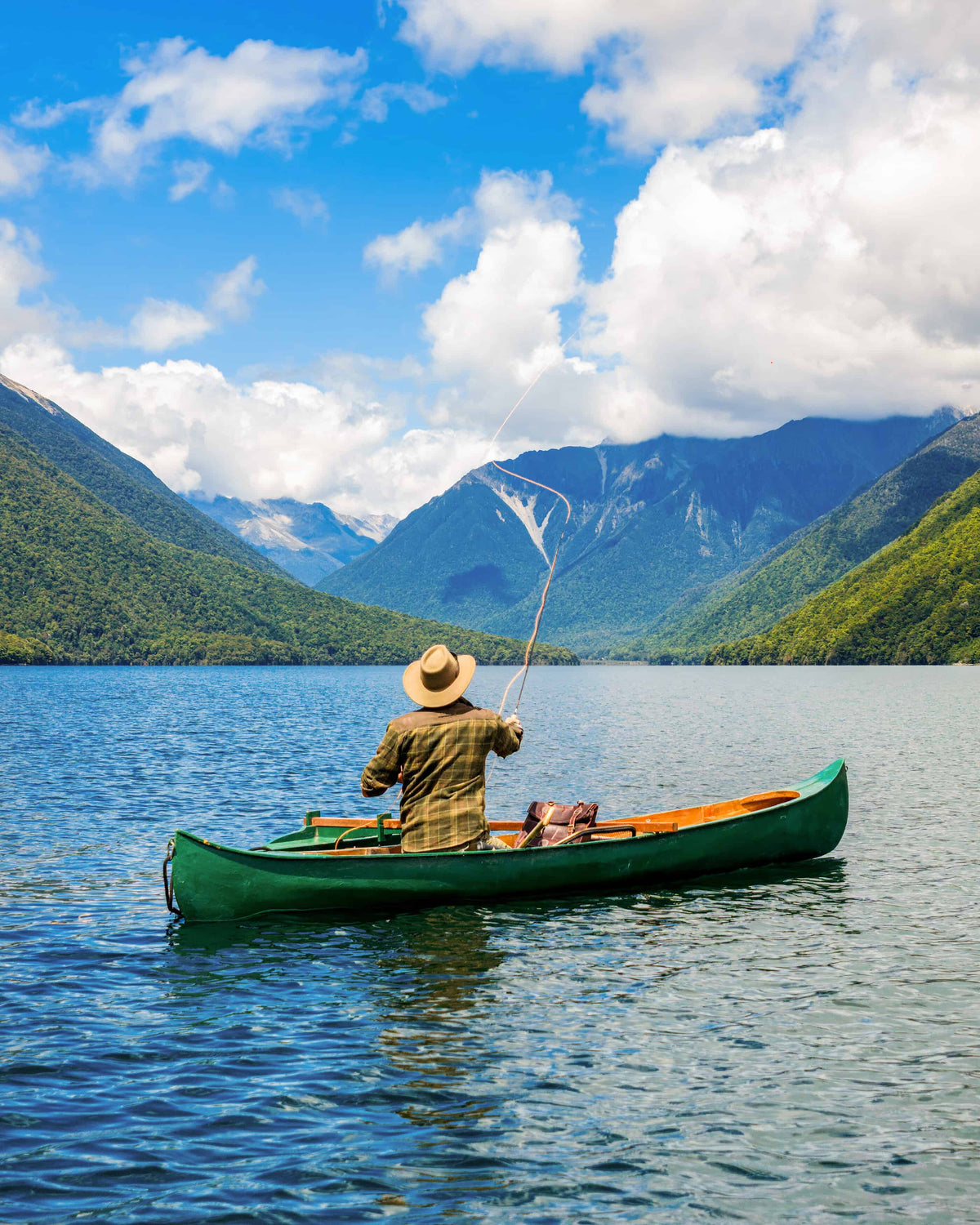
We slide the Canadian canoe from the roof and lower it gently into the lake.
It belongs here.
Perhaps that is why we keep coming back.
Nelson Lakes National Park remains strangely empty for a place so beautiful. No cell reception. No signal. No wireless life. Only mountains, forest, water—and trout.
Robin shoulders the dry bag.
"You remembered lunch?"
I hold up the fly rod.
"I'm hoping."
"That's not a plan."
"It usually is."
The canoe glides away from the weathered timber jetty, past the tangled congregation of giant freshwater eels coiled lazily beneath the piles.
Robin peers over the side.
"That's a decent one."
"They've seen a few tourists."
"And probably eaten one or two."
"They've certainly thought about it."
The lake accepts us without ceremony.
The silence strikes hard.
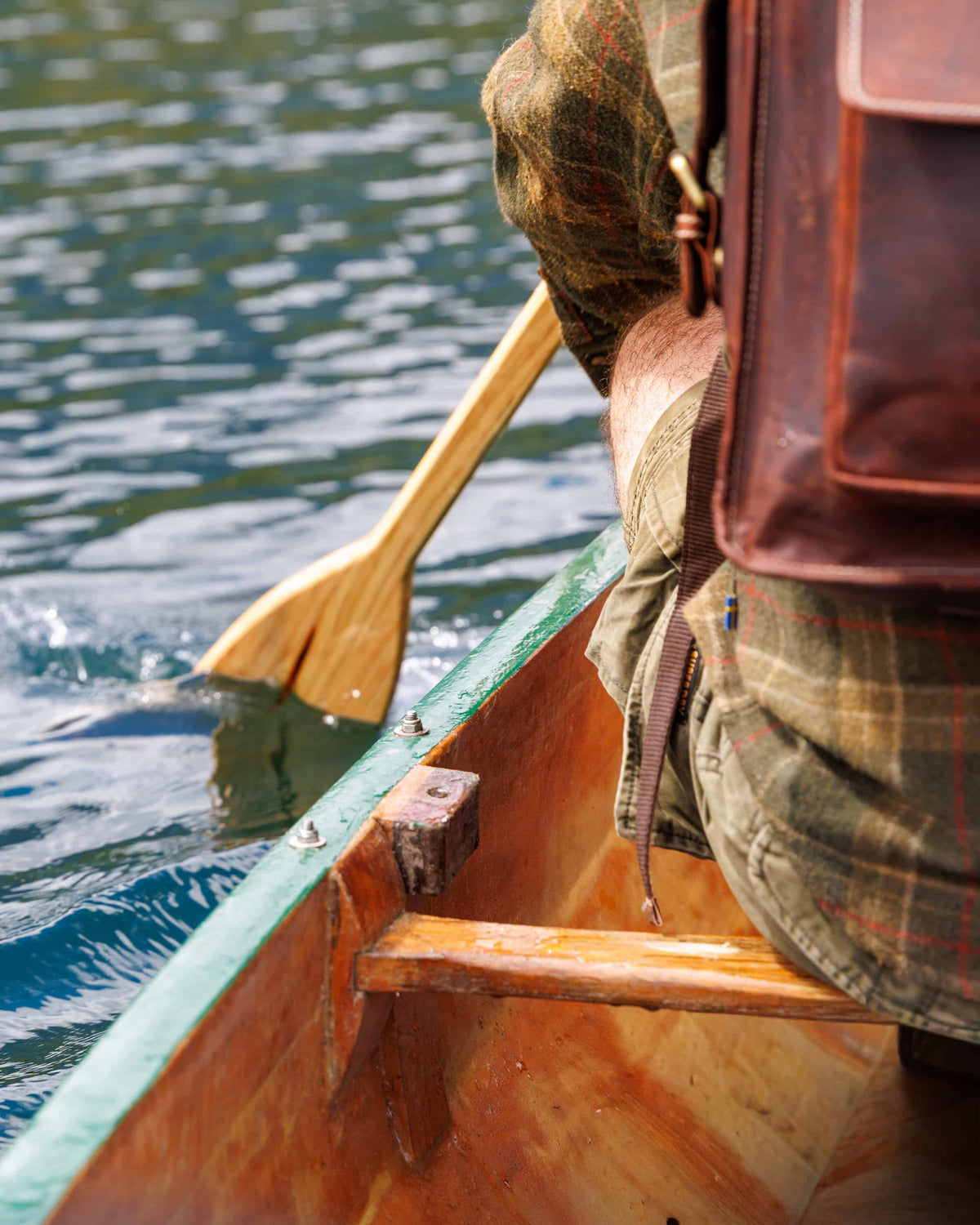
Not because there is no sound, but because every sound carries meaning. Water dripping from the paddle. The quiet creak of cedar ribs. The call of a tūī drifting through the beech forest. Somewhere high above, a New Zealand falcon cries against the mountainside.
The canoe settles into its own rhythm. Reach. Plant. Pull. Recover.
Robin slips his camera from the dry bag.
"Hold that line."
I pause.
He checks the screen.
"That'll do."
The shoreline slips by almost unnoticed. Ancient beech trees lean over the water, their branches dipping so low they almost touch the surface. Every now and then a silver trunk, bleached by decades of wind and weather, lies half submerged along the shore, a reminder that the lake is forever reclaiming the forest one tree at a time.
Each paddle stroke becomes quieter than the last until the blade enters the water without a splash. Canoes have a way of slowing more than your body. They slow your thoughts. The endless lists, deadlines and responsibilities fade behind until they seem to belong to somebody else.
A pair of scaup surfaces ahead, watches us with mild curiosity, then disappears beneath the water.
"Magic, isn't it?"
"It always is."
Somewhere deeper in the forest a bellbird joins the chorus, and for a few minutes we stop paddling altogether. The canoe drifts silently across water so clear I can count the rounded stones on the lake bed before they disappear into the deep blue beyond.
There is nowhere else either of us would rather be.
A splash breaks the stillness.
Robin points.
"One o'clock."
"I've got him."
The fly rod is already in my hand.
The day has begun.
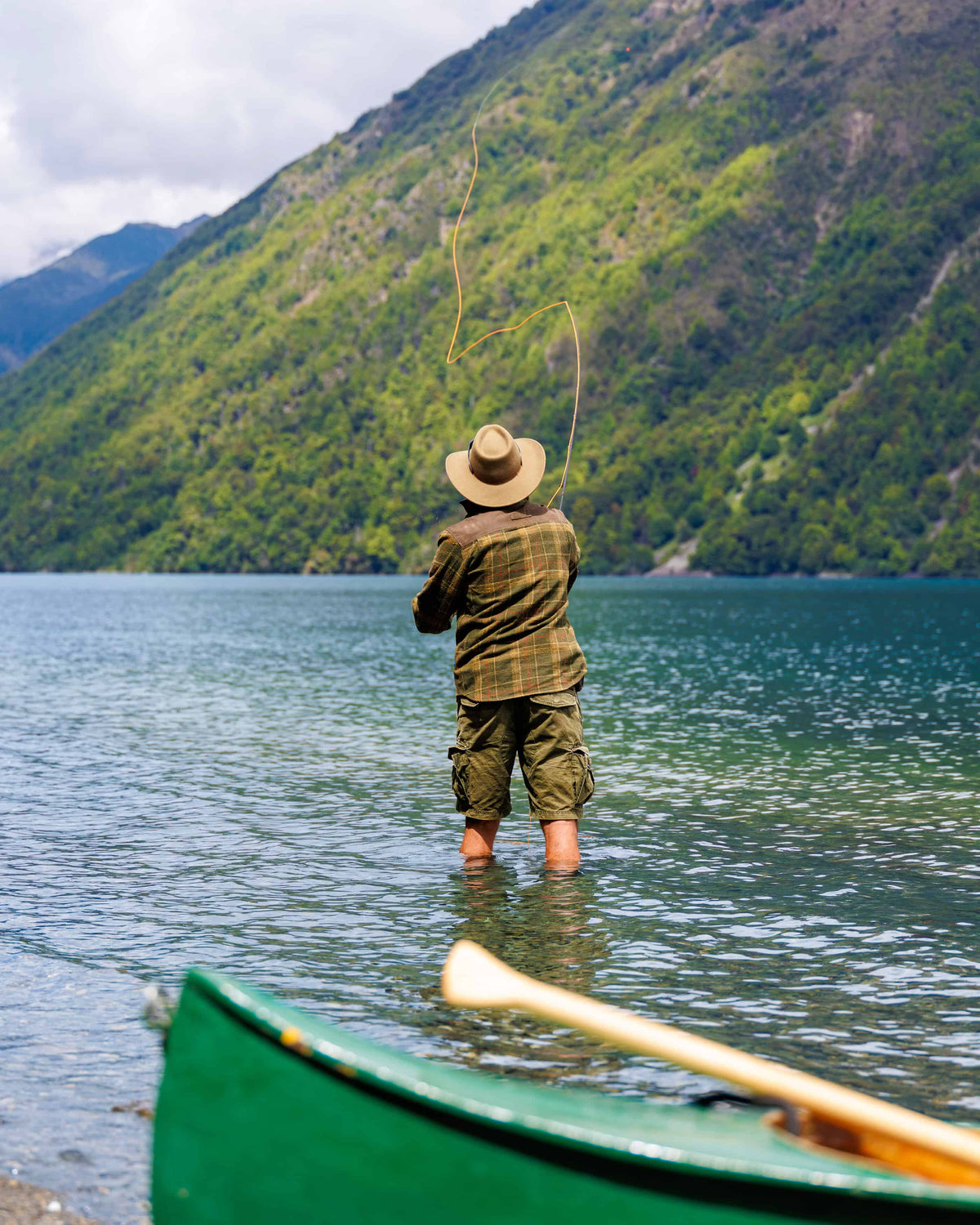
A Royal Wulff sails behind me before unrolling effortlessly across the lake. It settles softly on the surface, leaving nothing more than a handful of widening rings.
I mend the line with a flick of the wrist and let the fly drift naturally.
Nothing.
The line lifts clear of the water.
Another cast.
Smoother this time.
More deliberate.
The fly lands a metre beyond where the trout showed itself and begins its slow drift back towards me.
It disappears.
The lake erupts.
A bronze flank flashes beneath the surface before the trout launches clean into the air, scattering diamonds across the morning.
"Good fish."
Robin is already reaching for the camera.
The line comes tight and stays tight. The four-piece expedition rod bends deep into the cork. The trout runs hard towards deeper water before changing direction just as quickly, forcing me to strip line as fast as I can recover it.
"Keep him out of that log."
"I'm trying."
"He doesn't seem interested."
The trout leaps again.
Then again.
Each time landing with a crack that echoes across the still water.
For several minutes neither of us says much. There is no need. Robin knows enough about fly fishing to recognise when advice helps and when it simply becomes noise.
The trout begins to tire.
I draw it alongside the canoe.
Robin slips the net beneath it first time.
"That'll feed us."
"It'd want to."
The fish is beautifully marked, its crimson stripe glowing in the morning sun, dark spots scattered across polished silver flanks. A wild fish. Exactly what we'd hoped for.
Robin lowers the camera.
"Now you've earned lunch."
"I was getting hungry."
"You were always getting hungry."
He's right.
The fly rod is packed away and the paddles find their rhythm once more. The southern end of the lake grows closer as the Travers River quietly announces itself through cooler water and a gentle current pushing into Rotoiti.
The wind never arrives.
The reflections remain almost perfect, doubling the mountains until it becomes difficult to tell where earth ends and sky begins.
A small beach appears ahead beneath a stand of mountain beech.
"That'll do."
"It will."
I slide the canoe gently onto the stones while Robin gathers driftwood from higher up the beach.
"Dry stuff's under the trees."
"I've got it."
The Zippo clicks open with its familiar metallic snap. A spark catches fine tinder before dry twigs begin to crackle into life. Gradually the fire grows, fed with thicker branches and finally a few pieces of seasoned mānuka.
Robin watches the flames.
"Never gets old."
"No."
I clean the trout beside the lake before threading it onto a fresh mānuka stick. We prop it above the glowing coals and let time do the work.
The smell arrives long before the fish is ready.
Woodsmoke.
Fresh trout.
Beech forest.
Robin looks over.
"Think it's done?"
"You just want first bite."
"Obviously."
I pull the trout from the fire and lay it across a flat stone between us.
Robin tears away a piece of crisp skin before I have a chance.
"Quality control."
"That's what I thought."
He nods thoughtfully as though judging a fine restaurant.
"It'll pass."
Fresh trout needs very little. The flesh flakes apart beneath our fingers, still moist from the lake, carrying just enough mānuka smoke to remind us how it was cooked.
No plates.
No cutlery.
No sauces.
Just good food earned honestly.
Neither of us speaks for several minutes.
The beach doesn't require conversation.
The gentle wash of water against rounded stones says enough.
A pair of paradise ducks drifts past the mouth of the river while wisps of smoke disappear into the beech canopy.
Robin breaks the silence.
"We should do this more often."
"We always say that."
"One year we'll mean it."
"I reckon we already do."
The fire settles into glowing embers.
I pour two enamel mugs of coffee.
Robin raises his.
"To getting away."
I tap mine against it.
"And coming home."
It strikes me then that luxury has nothing to do with expense.
Sometimes it is simply having an entire wilderness to yourself, good company beside the fire, a canoe resting on the shoreline and nowhere else in the world you are expected to be.
Eventually the shadows begin to lengthen.
"Better head back."
"Unfortunately."
The canoe slides once more into the lake.
The afternoon breeze never really arrives. Instead the water turns to polished copper as the sun drops lower behind the St Arnaud Range. Every mountain is reflected with such perfect clarity that the world appears suspended between two skies.
We paddle north without hurry.
A kingfisher flashes electric blue across the shoreline before disappearing into the forest.
A black shag stands drying its wings on a half-submerged log.
The eels are back beneath the jetty when we arrive, waiting exactly where we left them.
Robin looks down.
"They haven't moved."
"They've had a busy day."
Loading the canoe takes only a few minutes.
Neither of us rushes.
We stand for a moment looking back across the lake.
"Same time next week?"
"I wish."
"We'll find something."
"We always do."
The Discovery settles onto the road and points back towards home.
The lake disappears behind the trees.
The conversation drifts between plans for the Leatham, another overnight in the Awatere, maybe a few days in the Sounds when the weather settles.
There is always another map to unfold.
Another river to cross.
Another fire to light.
By the time Blenheim reappears, the spell has quietly lifted, but only just.
The emails, the phones and the responsibilities will still be waiting tomorrow.
Today belonged to the lake.
And neither of us is quite ready to leave it behind.
---------------------The end---------------------
Type: A day on the water.
Duration: Allow one day (accommodation is available at the Alpine Lodge in St. Arnaud).
Difficulty: Easy - the weather can turn - this is a wild place.
Location: St. Arnaud, Nelson Lakes National Park, New Zealand.
Summary: Located equidistant from Blenheim and Nelson, about 90km west of Blenheim and 90km south of Nelson this is a musty visit destination for nature lovers in the the 'Top of the South'. Carve up Rainbow Ski Field and glide on the ice in the depth of winter, water ski in summer, hiking and kayaking all year. Trout fishing year round. There is a 25km hike around Lake Rotoiti (another blog) which is technical at times but well worth the effort. There are a plethora of great walks in the area - Visit DOC site here for more details.
Warnings: Check the weather and let someone know of your intentions and expected return time. Rockfalls and wild weather possible.
Notes: Spend a few days here at least! It's good all year!
How to get there:


Leave a comment
This site is protected by hCaptcha and the hCaptcha Privacy Policy and Terms of Service apply.